In Oakland, the complex mix of Bay Mud, alluvial deposits, and colluvium from the Oakland Hills demands more than a simple blow count. Shelby tube sampling gives us that undisturbed window into the soil's true structure and strength. We carefully extract thin-walled tube samples in cohesive strata to preserve the in-situ fabric and moisture content. This approach is critical when we later run consolidation tests to predict long-term settlement under embankment loads or building foundations. The Bay Mud alone can be deceptive — one block might behave differently from the next. Without these intact samples, you are designing based on guesswork rather than actual material behavior.
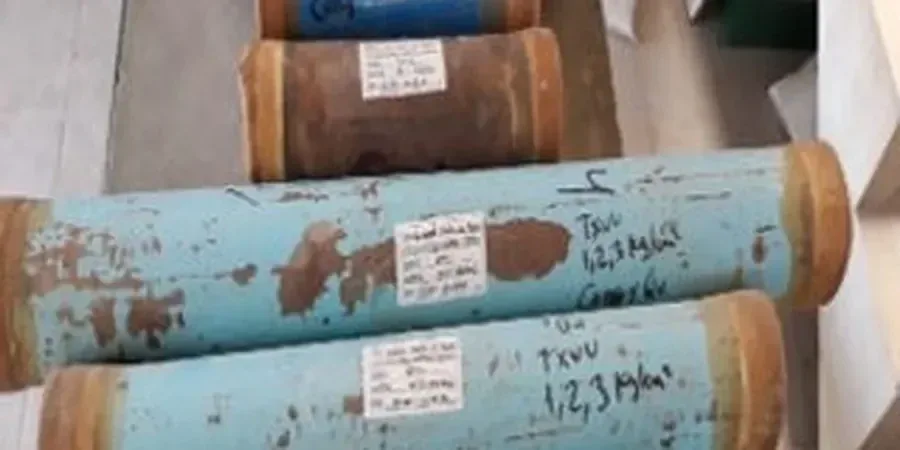
A Shelby tube sample preserves the original soil skeleton and pore structure — essential for reliable consolidation and strength parameters in soft Oakland clays.
Approach and scope
- Undrained shear strength (Su) via unconsolidated-undrained (UU) triaxial tests
- Sensitivity (St) — the ratio of undisturbed to remolded strength, especially relevant for Bay Mud
- Preconsolidation pressure (σ'p) and overconsolidation ratio (OCR)
- Compression and recompression indices (Cc, Cr) for settlement analysis
Site-specific factors
Oakland's urban development has filled former marshlands and tidal flats with engineered fill, creating a highly variable ground profile. Many older structures near Lake Merritt and the waterfront sit on untreated Bay Mud layers that are still consolidating under their own weight. Using a Shelby tube to retrieve intact samples from these deposits reveals whether the clay is normally consolidated or lightly overconsolidated — a distinction that directly affects foundation design. Without this data, differential settlement in adjacent buildings becomes a real possibility, especially when adding new loads next to existing foundations.
Relevant standards
ASTM D1587-15 (Standard Practice for Thin-Walled Tube Sampling), ASTM D4220-19 (Standard Practices for Preserving and Transporting Soil Samples), ASTM D2850-15 (Unconsolidated-Undrained Triaxial Compression Test)
Related technical services
Oakland Shelby Tube Field Sampling
Full-service field extraction using 3-inch thin-walled tubes pushed with a hydraulic drill rig. We coordinate with your drilling contractor to ensure zero disturbance during retrieval, sealing, and labeling. Each sample is logged on-site for recovery, moisture, and visual classification per ASTM D1587.
Oakland Lab Testing on Undisturbed Samples
Once tubes arrive at our accredited lab, we perform consolidation (oedometer) tests, UU triaxial compression, and unconfined compression tests. Results include e-log-p curves, Su profiles, and OCR estimates — all reported with ASTM compliance documentation.
Typical parameters
FAQ
What is the difference between a Shelby tube sample and a split-spoon SPT sample?
A split-spoon sampler is driven dynamically with a hammer, which heavily disturbs the soil structure and is only suitable for blow counts and index tests. A Shelby tube is pushed statically with a drill rig, preserving the natural fabric, moisture, and stress history of the clay. This allows for reliable strength and consolidation testing.
How much does undisturbed Shelby tube sampling cost in Oakland?
Typical costs range between US$380 and US$930 per sample point, depending on depth, access conditions, and whether lab testing is included. A standard project involving 3 to 5 tube samples with consolidation and triaxial testing usually falls in the upper part of that range.
In what Oakland soil types is Shelby tube sampling most effective?
It works best in cohesive soils like Bay Mud (CH), silty clays (CL-ML), and stiff clays (CL/CH). It is not suitable for clean sands, gravels, or highly cemented layers, where the tube may buckle or the sample may drop out during retrieval.
How long does it take to get results back from a Shelby tube sample?
Field extraction takes one to two days depending on the number of samples. Laboratory testing (consolidation + triaxial) typically requires 10 to 15 business days for a full set of results. We can expedite basic strength parameters in 5 to 7 days if needed.