I remember a project near Lake Merritt where a three-story apartment building started showing diagonal cracks in the exterior walls just two years after completion. The geotechnical report had flagged the site as having potentially collapsible soils, but the original team ran only basic classification tests. We were called in to perform a proper collapsible soil evaluation and found that the loose, dry sands and silts underlying the fill would settle nearly four inches when saturated. This is a classic Oakland problem: the alluvial fans from the Oakland Hills and the estuarine deposits along the estuary create a mosaic of soil fabrics that can collapse under their own weight once water infiltrates. For that building, we specified deep dynamic compaction followed by a reinforced mat foundation, and the settlement stopped completely. That experience cemented our approach to collapsible soil evaluation in Oakland as a non-negotiable first step for any site with undocumented fill or heterogeneous alluvium.
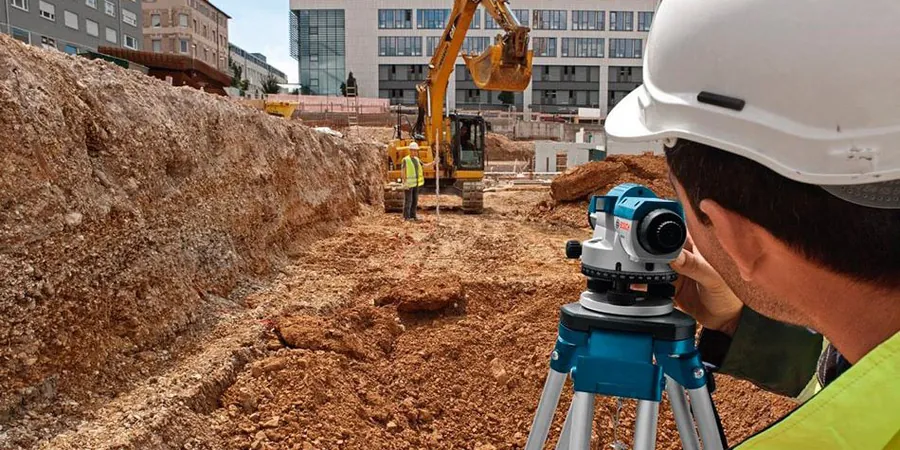
Collapse potentials above 2% in Oakland’s alluvial fans require pre-wetting or deep compaction before any shallow foundation is designed.
Approach and scope
Site-specific factors
The biggest risk we see in Oakland is the false security from dry-season testing. If we drill and sample in September, the soils at 4% moisture content may show zero collapse potential. But the same soil at 18% moisture during a wet winter can collapse three inches under a modest load. We have seen this happen on a parking structure near Jack London Square where the slab-on-grade dropped two inches after a single heavy rain event, damaging the drainage pipes and requiring a mud-jacking intervention. To avoid this, we always run the collapse test at the natural moisture content and then again after wetting to the optimum moisture content plus 5%. That double curve tells the real story. We also recommend installing infiltration testing to understand how quickly water can reach the collapsible layer from the surface or from a broken utility line. In Oakland’s Mediterranean climate, a five-year drought followed by a wet El Niño year is exactly the scenario that triggers these collapses.
Relevant standards
ASTM D5333-03 (Collapse Potential of Soils), IBC 2021 Section 1806.2 (Expansive and Collapsible Soils), ASTM D2435 (Oedometer Consolidation), ASTM D2216 (Moisture Content)
Related technical services
Field Sampling and Classification
Undisturbed tube sampling at 5-foot intervals to preserve the in-situ fabric, followed by grain size, Atterberg limits, and dry density. We target the most collapsible horizon, usually within the upper 20 feet.
Oedometer Collapse Testing
Single- and double-oedometer tests per ASTM D5333 to measure collapse potential at the expected overburden and structural stress. We report strain at inundation and total post-wetting strain.
Wetting Analysis and Infiltration Studies
Field infiltration tests to estimate how quickly water can reach the collapsible layer from the surface or from utility leaks. Combined with laboratory wetting curves to predict collapse depth.
Mitigation Recommendations
Pre-wetting, dynamic compaction, deep soil mixing, or over-excavation and recompaction at optimum moisture. We provide settlement estimates for each option under both dry and wet scenarios.
Typical parameters
FAQ
What is the difference between collapsible and expansive soils in Oakland?
Collapsible soils are loose, dry sands or silts that compact when wetted, causing settlement. Expansive soils are clays that swell when wetted, causing heave. In Oakland, both can occur on the same site: the alluvial fans often have collapsible layers near the surface underlain by expansive claystone. The evaluation methods are different — collapse uses oedometer inundation, while expansion uses free-swell or swell-pressure tests.
How much does collapsible soil evaluation cost in Oakland?
A standard evaluation for a single-family lot in Oakland ranges from US$930 to US$2,210, depending on the number of boreholes, the depth of sampling, and whether you need full oedometer testing versus a screening collapse index. Larger commercial sites with multiple test pits and infiltration studies will be at the higher end. We always recommend getting a quote after a site visit to account for access and subsurface variability.
Can I build on a site with collapsible soils in Oakland?
Yes, but you must mitigate the collapse potential before placing foundations. Common approaches include pre-wetting the soil to its optimum moisture content and recompacting, dynamic compaction for deeper collapsible layers, or using a deep foundation system (piles or piers) that bypasses the collapsible zone entirely. The IBC requires the geotechnical report to specify the design parameters after mitigation.
What is the collapse potential threshold for shallow foundations?
Most codes, including the IBC and ASCE 7, recommend that if the collapse potential exceeds 2% at the design overburden pressure, the soil must be treated as collapsible and mitigation is required. For sensitive structures like hospitals or schools, we use a 1% threshold. In Oakland, we often see collapse potentials between 3% and 7% in undocumented fill areas, so mitigation is almost always necessary.