The warm, semi-arid climate of Oakland, combined with its location on the eastern shore of San Francisco Bay, creates complex subgrade conditions. Expansive clay layers shrink and swell with seasonal moisture, while alluvial deposits from local creeks produce variable density. A proper road subgrade design must account for these shifts to prevent pavement cracking and differential settlement. Before specifying a California Bearing Ratio (CBR) target, our team conducts a thorough site investigation. This includes soil classification per ASTM D2487 and compaction testing under ASTM D698. Understanding how the local claystone and fill materials respond to loading is the first step toward a durable road. We also integrate georradar-gpr surveys to map buried utilities and old foundation remnants that could compromise the subgrade.
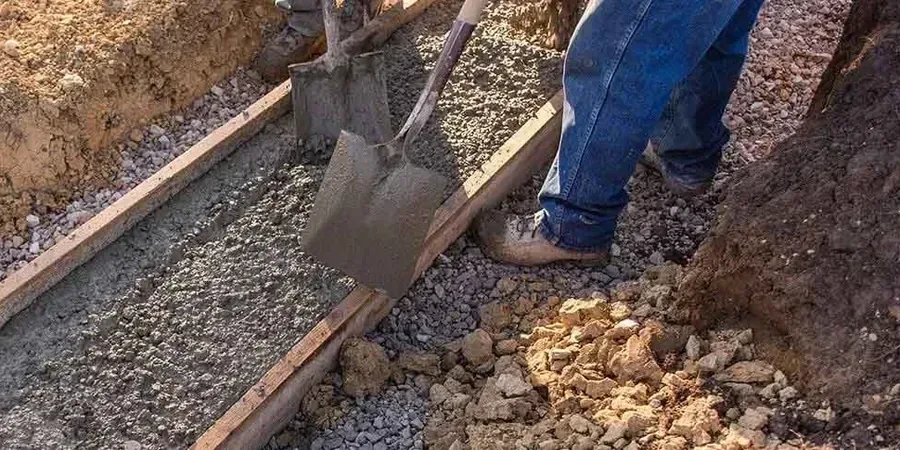
Oakland's variable subgrade demands layer-by-layer characterization — one CBR value rarely represents the full alignment.
Approach and scope
Site-specific factors
A recent widening project along a major Oakland arterial encountered a 12-foot layer of undocumented fill containing construction debris and organics. The original road subgrade design assumed stiff native clay, but the fill had CBR values below 2%. Construction delays exceeded three months while the design was revised. This scenario repeats across the city whenever subsurface conditions are not verified at close intervals. Ignoring variable fill depth or high groundwater can lead to pavement pumping, edge cracking, or total base failure within a single rainy season.
Service video
Relevant standards
ASTM D1586-18 (Standard Test Method for SPT), ASTM D4318-17 (Standard Test Methods for Liquid Limit, Plastic Limit, and Plasticity Index of Soils), IBC 2021 Chapter 18 (Soils and Foundations), ASTM D698-12 (Standard Test Methods for Laboratory Compaction Characteristics of Soil Using Standard Effort)
Related technical services
Subgrade Investigation and Classification
Boreholes, test pits, and sampling to classify soil layers per USCS. Includes Atterberg limits, natural moisture content, and in-situ density tests.
CBR and Compaction Analysis
Laboratory CBR testing under soaked and unsoaked conditions. Proctor curves determine the required compaction effort for each material type.
Stabilization Recommendations
Evaluation of lime, cement, or geosynthetic alternatives for high-PI clays and low-CBR subgrades. Includes dosage curves and thickness design.
Typical parameters
FAQ
What is the typical CBR value for road subgrade in Oakland?
Most natural subgrade soils in Oakland range from 5% to 15% CBR under soaked conditions. Fill areas or Bay Mud zones can drop below 3%, requiring stabilization.
How does seasonal moisture affect road subgrade design in Oakland?
The Mediterranean climate causes expansive clays to shrink in summer and swell in winter. Our design accounts for moisture variation by using soaked CBR values and specifying drainage layers to minimize water intrusion into the subgrade.
Do I need a geotechnical report for a residential driveway in Oakland?
Most single-family driveways do not require a full report. However, if the driveway exceeds 20 feet in width or slopes significantly, a subgrade evaluation is recommended to prevent settlement or cracking. Check with Oakland's building department for specific requirements.
What is the cost range for a road subgrade design study in Oakland?
The cost typically ranges between US$1.040 and US$3.340 depending on the number of test pits, laboratory tests required, and the complexity of soil conditions. A detailed quote is provided after the initial site walk.