Geotechnical investigation in Oakland is the critical first step for any construction or infrastructure project, providing essential data about the subsurface conditions that directly influence foundation design, slope stability, and seismic resilience. This category encompasses a suite of field and laboratory methods used to characterize soil, rock, and groundwater, ensuring that engineers can design safe, cost-effective structures adapted to the unique challenges of the East Bay. From initial site reconnaissance to advanced in-situ testing, a proper investigation reduces the risk of differential settlement, liquefaction, and unexpected ground behavior. In a city with Oakland's complex geology and history of seismic activity, skipping or minimizing this phase is not just a technical oversight—it is a threat to public safety and long-term asset performance.
Oakland sits at the boundary between the flat, alluvial plains of the San Francisco Bay and the steep, tectonically active hills of the Coast Range. The western part of the city is underlain by Holocene-age Bay Mud—a highly compressible, normally consolidated clay that can exceed 30 meters in thickness—interbedded with loose, liquefiable sands and silts. Moving east, the Hayward Fault Zone creates a transition into Mesozoic and Tertiary bedrock of the Franciscan Complex and Great Valley Sequence, often mantled by colluvium and landslide debris. Groundwater is typically shallow in the flatlands, sometimes within two meters of the surface, and can be artesian or perched in hillside settings. These conditions demand investigation methods tailored to both soft soil and rock environments, frequently within the same project footprint.
All geotechnical investigations in Oakland must conform to the California Building Code (CBC), which adopts and amends the International Building Code, and are overseen by the City of Oakland's Building Services Division. The CBC mandates site-specific studies for Seismic Design Categories D, E, and F—which cover virtually all of Oakland due to proximity to the Hayward and San Andreas faults. Reports must address liquefaction potential under CBC Section 1803, bearing capacity, lateral earth pressures, and slope stability where applicable. Additional state-level requirements include compliance with the California Environmental Quality Act (CEQA) for public projects and adherence to guidelines from the California Geological Survey, particularly for fault rupture hazard zones and seismic slope instability mapping that affect large portions of the Oakland Hills.
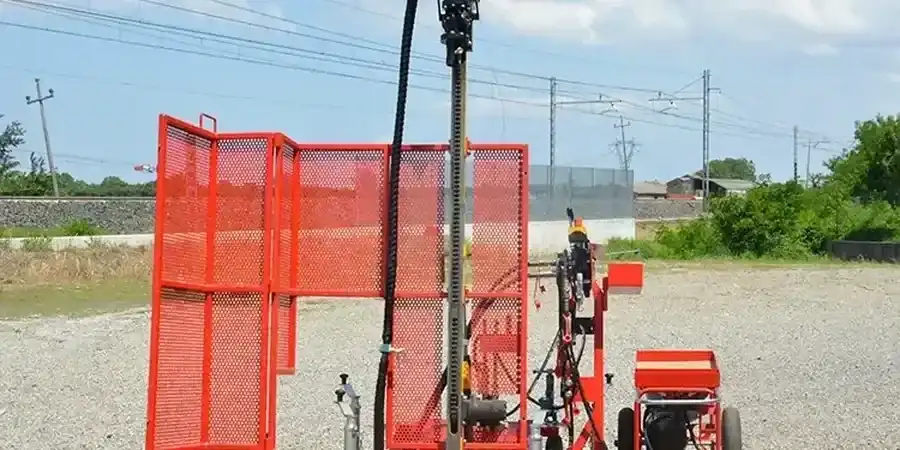
Projects requiring these investigations range from single-family home additions in the Rockridge district to high-rise developments in downtown Oakland and major public works like BART extensions or freeway retrofits. An exploratory test pit is often the simplest and most direct method for shallow soil profiling, allowing visual inspection of strata and collection of large bulk samples, particularly useful for pavement design or utility trenching. When soft clays or intermediate geomaterials are encountered, the CPT (Cone Penetration Test) provides near-continuous profiles of tip resistance, sleeve friction, and pore pressure, enabling precise stratigraphic correlation and liquefaction assessment without cuttings. For deeper investigations or when rock coring is required, the SPT (Standard Penetration Test) remains the standard of practice, delivering disturbed samples for classification and index testing while recording blow counts for empirical design correlations. Each method fills a specific role in building the comprehensive ground model demanded by Oakland's regulatory and geologic setting.
FAQ
What does a geotechnical investigation in Oakland typically include?
A comprehensive investigation includes site reconnaissance, drilling or probing to collect soil and rock samples, in-situ testing such as SPT or CPT, groundwater monitoring, and laboratory analysis for strength, compressibility, and chemical properties. The resulting report provides recommendations for foundation type, bearing capacity, settlement estimates, lateral earth pressures, and seismic design parameters per California Building Code requirements.
When is a geotechnical investigation required for a project in Oakland?
The City of Oakland mandates a site-specific investigation for most new construction, significant additions, and retaining walls over a certain height, especially within mapped seismic hazard zones. Any project requiring a building permit in Seismic Design Category D, E, or F—which includes nearly all of Oakland—must submit a geotechnical report addressing liquefaction, slope stability, and fault rupture potential before plan approval.
How do Oakland's local soil conditions affect investigation methods?
The presence of deep Bay Mud and loose alluvial sands in the flatlands requires methods sensitive to soft soil behavior, such as CPT for continuous profiling and vane shear testing. In the hills, where Franciscan bedrock and landslide debris dominate, SPT with rock coring and exploratory pits are often necessary to assess weathering, discontinuities, and groundwater perched within colluvium.
What are the consequences of not performing an adequate investigation in Oakland?
Inadequate investigation can lead to under-designed foundations, resulting in excessive settlement, differential movement, or bearing capacity failure, particularly over compressible Bay Mud. Structurally, ignoring seismic hazards like liquefaction or fault rupture risks catastrophic damage during an earthquake, while regulatory non-compliance can halt permitting, trigger costly redesigns, and create significant legal liability for property owners and developers.