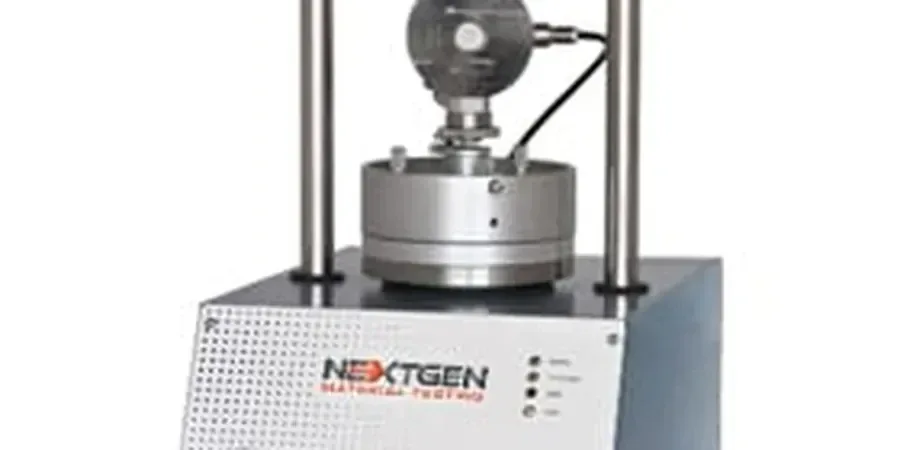
The oedometer frame sits on the lab bench with the dial gauge zeroed and the specimen inside the brass ring. We trim a Shelby tube sample of Oakland gray clay and set it under the loading yoke. Increments start at 0.25 kg/cm² and go up to 16 kg/cm², each step held for 24 hours. The data logger records every 0.001 mm of compression. This gives us the preconsolidation pressure, compression index, and coefficient of consolidation. Before we even load the frame, we check the sample's initial water content and run a density cone test on the field block to confirm unit weight. The entire sequence follows ASTM D2435-11 for incremental loading.
Bay mud's compression index of 0.4 means a 10-foot fill will settle nearly 2 feet if not preloaded.
Approach and scope
Site-specific factors
A seven-story apartment building near Jack London Square was designed with mat foundation on Bay mud. The geotechnical report showed a preconsolidation pressure of 1.2 kg/cm². The design load was 2.0 kg/cm². Without the oedometer test, the engineer would have assumed elastic settlement of 50 mm. The test revealed secondary compression would add 120 mm over 30 years. The fix was surcharging and vertical drains. Skipping the consolidation test could have led to cracked slabs and tilted elevator shafts. That risk is real in Oakland's soft ground.
Service video
Relevant standards
ASTM D2435-11 (Standard Test Method for One-Dimensional Consolidation Properties of Soils), ASTM D4186-18 (Standard Test Method for One-Dimensional Consolidation Properties of Soils Using Controlled-Strain Loading), IBC 2021 Chapter 18 (Soils and Foundations)
Related technical services
Incremental Loading Oedometer
Standard 24-hour load increments with up to 8 load steps. We report e-log-p curves, Cc, Cs, cv, and σ'p. Suitable for Bay mud and clay fills.
Constant Rate of Strain (CRS) Consolidation
Faster than incremental loading. We use ASTM D4186 for projects that need cv and permeability in 48 hours. Ideal for preload design in Oakland.
Typical parameters
FAQ
How long does an oedometer consolidation test take in Oakland?
A standard incremental loading test with 6 load steps takes 6 to 8 days. The constant rate of strain (CRS) method finishes in 48 hours. We can prioritize your sample if the schedule is tight.
What is the typical cost for an oedometer test in Oakland?
The price range is US$190 – US$420 per sample, depending on the number of load increments and whether you need rebound cycles. A full set of three samples with rebound runs around US$1,100.
Do you need undisturbed samples for the oedometer test?
Yes. We require thin-wall Shelby tube samples (3-inch or 2.5-inch diameter) or block samples. Disturbed samples give unreliable compression curves. We can arrange a field visit to supervise sampling.