Foundation engineering in Oakland, California, encompasses the analysis, design, and construction of the structural elements that support buildings and infrastructure, transferring loads safely to the underlying soil and rock. This category is critically important in Oakland due to the city's complex seismic profile, situated directly on the active Hayward Fault and within a region of high earthquake hazard. A properly designed foundation is not merely a structural component; it is a life-safety system that must resist strong ground shaking, mitigate liquefaction risks, and accommodate the dynamic behavior of the Bay Area's diverse geologic formations. Without rigorous geotechnical evaluation and innovative foundation solutions, structures are highly vulnerable to differential settlement, catastrophic tilting, or collapse during a seismic event.
Oakland's subsurface conditions are a challenging patchwork, transitioning rapidly from the deep, soft bay mud deposits of the flatlands near the estuary and Jack London Square to the dense sands and Franciscan Complex bedrock of the hillside districts like Montclair and Piedmont Pines. The flatlands, underlain by estuarine clays and silts, are particularly susceptible to long-term settlement and intense amplification of seismic waves. In contrast, hillside construction faces challenges of shallow bedrock, landslide potential, and expansive soils. A critical local hazard is the presence of collapsible soils in alluvial fan zones, requiring specialized evaluation before any design can proceed. Addressing these conditions often begins with a thorough collapsible soil evaluation to determine the risk of sudden volume reduction upon wetting, which can undermine conventional footing systems.
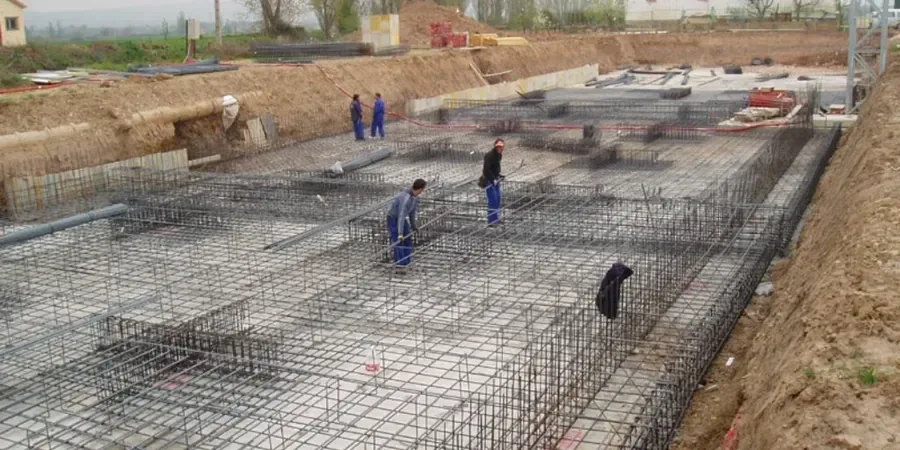
Geotechnical practice in Oakland is governed by the California Building Code (CBC), which adopts and amends the International Building Code (IBC) with state-specific seismic provisions. Chapter 18 of the CBC, along with the California Existing Building Code (CEBC) for retrofits, mandates site-specific geotechnical investigations for most structures. The City of Oakland’s Planning and Building Department enforces these codes and requires strict adherence to the California Geological Survey's Seismic Hazard Zone Maps, which delineate areas prone to liquefaction and earthquake-induced landslides. These regulations compel engineers to design foundations that not only meet allowable bearing capacity and settlement criteria under static conditions but also demonstrate adequate performance under the maximum considered earthquake (MCE) ground motions.
The range of projects requiring expert foundation design in Oakland is vast, from seismic retrofits of historic unreinforced masonry buildings in downtown to new mixed-use mid-rise developments in rapidly evolving neighborhoods. Light-frame residential construction on hillside lots frequently demands innovative solutions to anchor to steep terrain, while heavy commercial structures on the plain require deep foundations to bypass compressible clays. For low-rise structures on competent soil, a shallow foundation design using spread footings or mat slabs may be appropriate, provided settlement and bearing capacity are verified. For projects in liquefiable zones or those imposing high structural loads, a micropile design offers a high-capacity, vibration-sensitive alternative, enabling deep load transfer through unstable strata to a competent bearing layer. Ultimately, choosing the right foundation typology is a complex decision balancing structural demand, subsurface risk, and regulatory compliance, forming the bedrock of resilient development in Oakland.
FAQ
What is the most common geotechnical challenge for foundations in Oakland's flatland areas?
The most prevalent challenge is the presence of thick, soft bay mud (Younger Bay Mud) which is highly compressible and prone to amplifying seismic shaking. This can lead to excessive settlement and bearing capacity failure. Additionally, these saturated, loose silts and sands have a high liquefaction potential during an earthquake, requiring deep foundations or ground improvement to ensure stability.
How does the Hayward Fault influence foundation design requirements in Oakland?
The Hayward Fault's proximity necessitates strict seismic design under the California Building Code. Foundations must be designed for Maximum Considered Earthquake (MCE) ground motions, considering near-fault effects like strong directional shaking. This often rules out conventional shallow footings in favor of deep, ductile systems like micropiles or grade beams that can accommodate significant lateral and vertical displacements without brittle failure.
What are the key differences between a prescriptive and an engineered foundation in Oakland?
A prescriptive foundation follows conventional construction rules in the building code, suitable only for low-seismic, flat sites with documented non-problematic soil. An engineered foundation, mandatory for most Oakland projects due to seismic zones and variable soils, is a custom design based on a site-specific geotechnical investigation. It calculates exact soil bearing pressures, reinforcement, and embedment depths to meet specific safety factors against sliding, overturning, and settlement.
When is a deep foundation, such as piles, required instead of a shallow footing in Oakland?
Deep foundations are required when shallow soils are incompetent, such as in areas mapped as liquefaction zones, sites with thick Bay Mud exceeding 10 feet, or steep hillsides where shallow bedrock is inclined. They are also necessary to support high structural loads from mid-rise buildings that would exceed the allowable bearing capacity of near-surface soils, transferring the load to deeper, stable strata.