Our grouting rigs arrive on site with high-pressure pumps and automated mixing units to handle the varied soil conditions across Oakland. From the soft bay mud near the estuary to the dense alluvial fans in the foothills, we adjust injection pressures and grout mix designs on the fly. Before mobilizing equipment for grouting design, we always run a permeability field test to estimate soil porosity and determine the optimal injection parameters. That single data point avoids wasted material and ensures the grout reaches the target zone instead of escaping into adjacent layers.
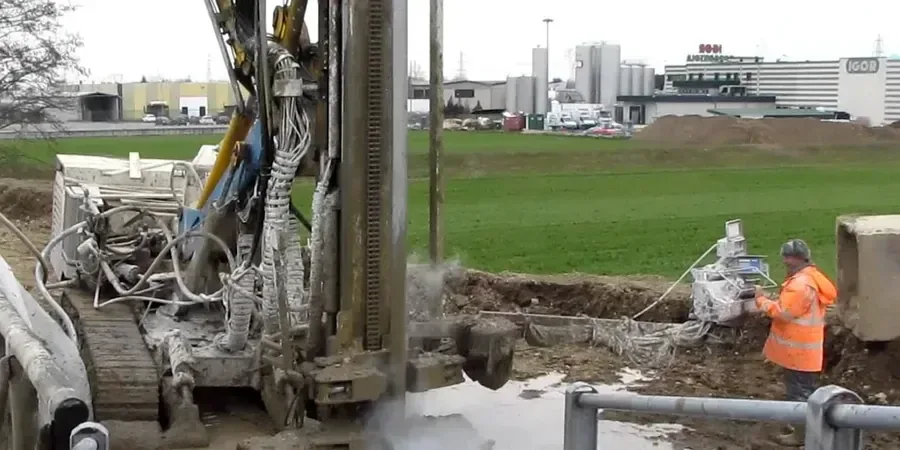
A single permeability test before injection can cut grout waste by 30% and prevent surface heave in Oakland's bay mud.
Approach and scope
Site-specific factors
The wet season in Oakland runs from November to March, raising groundwater levels and increasing hydrostatic pressure on injection zones. If grouting design does not account for seasonal fluctuations, the injected material can wash out before setting. The 1989 Loma Prieta earthquake also left a legacy of loose, liquefiable sands in the flatlands. Grouting in these zones must consider post-injection densification, or the treated soil may still settle under seismic loading. We always run a liquefaction analysis on the same borings to cross-check the grouting design against the cyclic resistance ratio of the native soil.
Relevant standards
ASTM D5092 – Standard Practice for Design and Installation of Groundwater Monitoring Wells, ASCE Grouting Committee – Guidelines for Grouting in Geotechnical Engineering, IBC Chapter 18 – Soils and Foundations, FHWA-RD-00-090 – Grouting Methods in Geotechnical Engineering
Related technical services
Permeation and Compaction Grouting
For loose sands and soft clays in the flatlands, we design permeation grouting with low viscosity mixes to fill pore spaces without fracturing the matrix. In deeper zones with higher confinement, compaction grouting densifies the soil through displacement. Each design specifies stage lengths, injection rates, and quality control tests such as pressure-hold and post-grout SPT.
Fracture Grouting (Claquage)
In stiff clay or heterogeneous fills, fracture grouting opens preferential planes to inject cementitious slurry and improve overall stiffness. We calibrate the fracture pressure using dilatometer data and monitor heave with settlement plates. This approach is common under existing foundations in Oakland's older industrial areas.
Typical parameters
FAQ
How does Oakland's bay mud affect grouting design?
Bay mud is soft, highly plastic, and has low permeability. Fracture grouting is often preferred over permeation because the mud's fine pores resist flow. We adjust the grout mix to a higher water-cement ratio and use a lower injection rate to avoid hydraulic fracturing of adjacent layers.
What is the typical cost range for a grouting design project in Oakland?
The cost ranges between US$1,240 and US$3,710 depending on the number of injection stages, depth of treatment, and site accessibility. Larger volumes or multiple zones may increase the total, but we provide a fixed design fee before mobilization.
What quality control tests are required after grouting?
Post-grouting verification includes pressure-hold tests at each stage, core sampling of the treated mass, and SPT or CPT soundings to measure strength gain. For seismic zones, we also compare pre- and post-grout vs30/" data-interlink="1">shear wave velocities using MASW to confirm liquefaction resistance.