A backhoe excavator arrives on site, its bucket poised to cut a clean trench through Oakland's varied subsurface. The machine works methodically, opening a pit typically four to six feet deep, wide enough for an engineer to descend and log the exposed strata firsthand. This direct observation method, an exploratory test pit, reveals the soil profile in a way that borings alone cannot match. For projects across Oakland, from the alluvial fans near Lake Merritt to the stiffer Franciscan Complex bedrock under the hills, the visual confirmation of layering, moisture content, and the presence of cobbles or old fill is invaluable. The team logs each horizon according to ASTM D2488, noting color, plasticity, and structure before collecting bulk and undisturbed samples for lab testing.
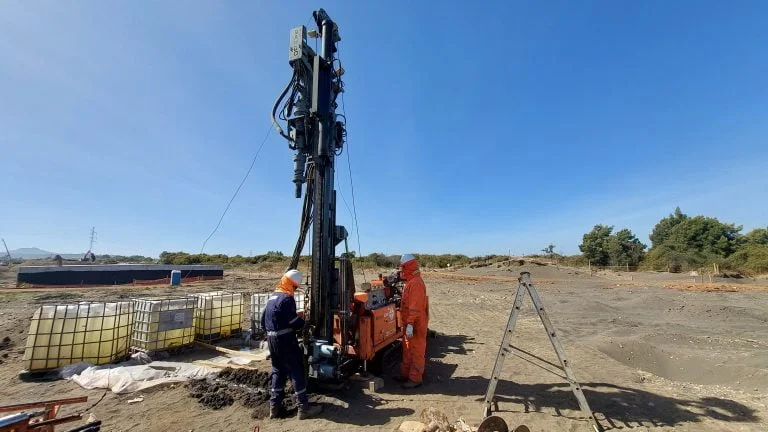
Test pits expose lateral variability that SPT samples miss, particularly thin lenses of soft clay or loose sand controlling settlement.
Approach and scope
Site-specific factors
Oakland's urban fabric sits on a patchwork of natural and man-made ground. The 1860s shoreline fill, the debris from the 1906 earthquake, and the cut-and-fill grading for the postwar subdivisions all created heterogeneous conditions that surface maps cannot capture. A test pit program catches these buried hazards before they become differential settlement or a utility conflict. The cost of opening a few pits during design is trivial compared to a change order during excavation. For one East Oakland infill project, a test pit revealed a former creek channel filled with loose sand and debris below the proposed footing line, allowing the team to switch to deep foundations before any concrete was poured.
Relevant standards
ASTM D420 (Standard Guide for Site Characterization for Engineering Design and Construction Purposes), ASTM D2488 (Standard Practice for Description and Identification of Soils – Visual-Manual Procedure), OSHA 29 CFR 1926 Subpart P (Excavation safety requirements for test pits)
Related technical services
In-Situ Density Testing
After the pit is logged, the field team performs sand cone or nuclear gauge tests on each distinct soil layer to measure compaction and moisture content. These values directly inform compaction specifications for backfill and verify that the engineered fill meets project requirements.
Bulk and Undisturbed Sampling
Once the soil profile is documented, large bag samples are collected for laboratory compaction and classification tests. Thin-walled Shelby tubes are driven into cohesive layers to obtain undisturbed specimens for strength and consolidation testing.
Typical parameters
FAQ
How deep can an exploratory test pit go in Oakland soils?
Most test pits reach 10 to 15 feet, but the practical limit depends on groundwater, soil stability, and shoring requirements. In Oakland's hillside areas with stiff clay or weathered rock, pits of 12 feet are routine. In the flatlands where groundwater is shallow, the pit typically terminates at the water table unless dewatering is permitted.
Do I need a test pit if I already have soil borings?
Borings provide continuous N-values but limited visual information. Test pits show the soil fabric, the exact thickness of each layer, and the presence of cobbles, roots, or debris that a boring might miss. For shallow foundations, retaining walls, or utility trenches in Oakland's variable fill, the pit's direct observation often changes the design assumptions.
What is the typical cost range for an exploratory test pit in Oakland?
The cost for a single test pit including logging, sampling, and basic In-Situ typically ranges between US$550 and US$850. The final price depends on depth, number of samples, and whether shoring or traffic control is required. Volume discounts apply when multiple pits are opened in a single mobilization.