Oakland sits on a challenging mix of stiff clays, alluvial sands, and the notorious Bay Mud — soft, compressible estuarine deposits up to 30 meters deep in some areas. Groundwater is often shallow, sitting 2 to 5 meters below grade. For any excavation, foundation, or underground structure, knowing how fast water moves through these layers is critical. That is why we run laboratory permeability tests using falling head and constant head methods. The falling head setup is ideal for low-permeability clays and silts, while constant head suits clean sands. Before we can design an effective drainage system or evaluate slope stability, we need k-values from undisturbed samples taken in Oakland. Our lab follows ASTM D5084 for fine-grained soils and ASTM D2434 for coarse-grained soils. Every test report includes the coefficient of permeability at a reference temperature of 20 degrees C.
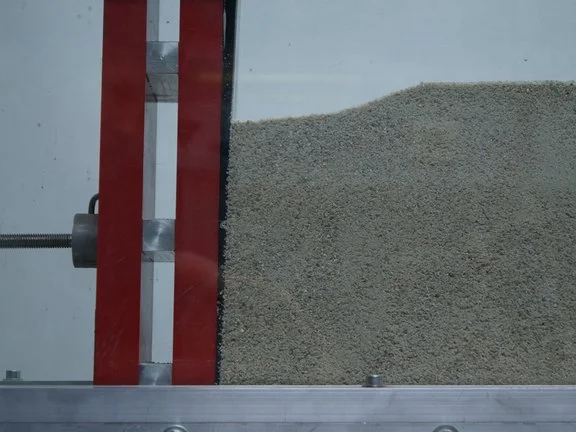
A single permeability value from a falling head test on Oakland Bay Mud can save weeks of dewatering costs during excavation.
Approach and scope
Site-specific factors
We set up the falling head permeameter on a vibration-isolated bench in our Oakland lab. The standpipe is graduated in millimeters. For constant head tests, we use a Mariotte bottle to maintain a stable water level. The technician records the time for the water level to drop between two marks. For low-permeability clays, a single test can take 72 hours. We run three trials per sample and average the results. The biggest risk is sidewall leakage between the soil specimen and the rubber membrane. To prevent that, we use a split mold with a thin layer of bentonite paste around the edges. If the test is for a soil stabilization design, we also check the final water content to confirm saturation. All data goes into a chain-of-custody form signed by the lab manager.
Relevant standards
ASTM D5084-16a (Falling head permeability), ASTM D2434-19 (Constant head permeability), ASTM D4220-17 (Sample preservation and handling)
Related technical services
Falling Head Permeability Test (ASTM D5084)
For fine-grained soils — Bay Mud, silty clays, and low-permeability fills. Uses backpressure saturation and a graduated standpipe. Reports k at 20°C. Typical duration: 5 to 10 days.
Constant Head Permeability Test (ASTM D2434)
For clean sands and gravels from the Oakland alluvial fans. Maintains a constant hydraulic gradient. Suitable for drainage layer design and filter evaluation. Turnaround: 3 to 5 days.
This service complements our laboratory testing work for a complete project analysis.
Typical parameters
FAQ
How long does a laboratory permeability test take for Oakland Bay Mud?
A falling head test on Bay Mud typically takes 7 to 10 days. The low permeability (10⁻⁷ to 10⁻⁹ cm/s) means very slow water movement through the specimen. We run three trials and average the results.
What is the difference between falling head and constant head methods?
Falling head measures how fast water drops in a standpipe — best for clays and silts with k below 10⁻⁴ cm/s. Constant head keeps a steady water level and measures flow volume — used for sands and gravels with k above 10⁻⁴ cm/s. ASTM D5084 covers falling head; ASTM D2434 covers constant head.
How much does a laboratory permeability test cost in Oakland?
The typical range for a single falling head or constant head test is between US$430 and US$620. The price depends on sample condition, number of trials, and whether backpressure saturation is required. Contact us for a firm quote based on your specific scope.
Do you test recompacted samples or only undisturbed ones?
We test both. Undisturbed Shelby tube samples are preferred for in-situ permeability of natural soils. Recompacted samples (Proctor mold or Harvard miniature) are used for compacted fill, liner, or cover material. Specify the purpose when you submit the sample.