Oakland sits on a complex mosaic of alluvial fan deposits, bay mud, and colluvium from the surrounding hills. The seasonal fog and winter rains push the water table close to the surface in many neighborhoods, which directly affects how soils behave under load. For any excavation or foundation work, knowing the drained and undrained shear strength is non-negotiable. That is why we run CU, CD, and UU triaxial tests on undisturbed samples recovered from boreholes. The results feed directly into bearing capacity calculations and slope stability models. Before we begin, we often recommend a calicata exploratory to visually log the stratigraphy and select the most representative sample intervals.
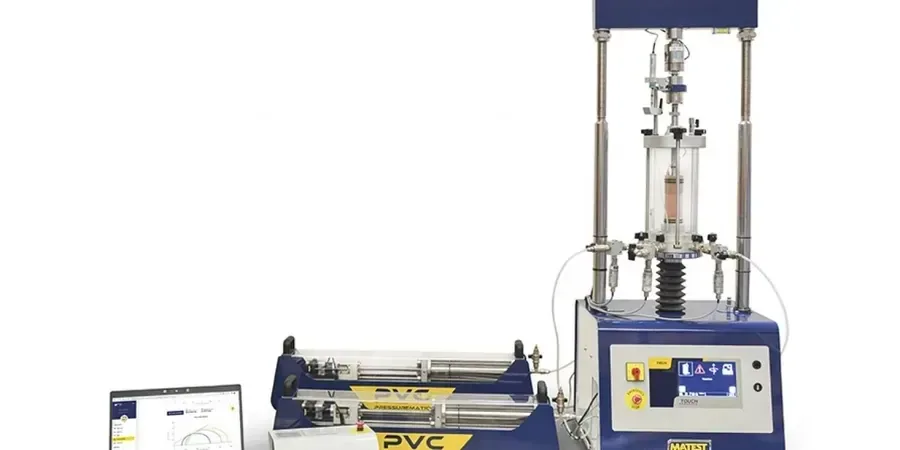
In Oakland, the transition from bay mud to stiff alluvium can occur within five meters; triaxial testing captures the strength contrast accurately.
Approach and scope
Site-specific factors
The soils in the lower flatlands of Oakland, near the estuary, are soft bay muds that can lose up to 50% of their undrained strength under cyclic loading from an earthquake. In contrast, the hillside neighborhoods like Montclair and Piedmont face colluvial soils prone to creep and shallow sliding. A triaxial test on undisturbed samples from each zone tells us exactly how the soil will respond under both static and seismic conditions. Without this data, a foundation design might be overly conservative or, worse, unsafe. We always run at least three specimens per stratum to capture natural variability and report the mean strength parameters used in the analysis.
Relevant standards
ASTM D2850-15 (Standard Test Method for Unconsolidated-Undrained Triaxial Compression Test), ASTM D4767-11 (Standard Test Method for Consolidated-Undrained Triaxial Compression Test), ASTM D7181-11 (Standard Test Method for Consolidated-Drained Triaxial Compression Test), ASTM D4220/D4220M (Standard Practices for Preserving and Transporting Soil Samples)
Related technical services
Undisturbed Sampling
Thin-walled Shelby tubes and pitcher samplers to recover high-quality specimens for triaxial and consolidation tests.
Consolidation Test (Oedometer)
One-dimensional consolidation tests (ASTM D2435) to measure preconsolidation pressure and compressibility, paired with triaxial data.
Direct Shear Test
Quick determination of drained friction angle on granular soils or residual strength on clay; useful for preliminary screening.
Soil Classification
Unified Soil Classification System (USCS) via sieve analysis, hydrometer, and Atterberg limits to correlate with triaxial behavior.
Typical parameters
FAQ
What is the difference between UU, CU, and CD triaxial tests?
UU (unconsolidated-undrained) measures total undrained strength quickly, typically for short-term stability. CU (consolidated-undrained) applies a confining pressure and reads pore pressure to obtain effective stress parameters (c', φ'). CD (consolidated-drained) allows full drainage during shearing, giving drained strength parameters for long-term conditions. The choice depends on the soil type and the loading scenario you are modeling.
How long does a triaxial test take in Oakland?
A UU test can be completed in one day. A CU test takes two to three days per specimen, including saturation and consolidation. A CD test may take five to ten days per specimen because the drainage stage is slow. The total program for a typical project with three specimens and two test types usually runs one to two weeks.
How much does a triaxial test cost in Oakland?
The typical range for a triaxial test program in Oakland is between US$1,740 and US$2,870. This includes sample preparation, saturation, consolidation, shearing, and a detailed report with stress-strain curves and Mohr circles. The final price depends on the number of specimens, test type (UU, CU, or CD), and the required turnaround time.
Do you need undisturbed samples for a triaxial test?
Yes, triaxial tests require undisturbed samples to preserve the in-situ structure, density, and moisture content. We typically obtain these with Shelby tubes or block samples from test pits. If only disturbed samples are available, we can reconstitute specimens to a target density, but the results will represent a reconstituted condition, not the natural soil fabric.