We recently worked on a six-story mixed-use building near Lake Merritt. The geotechnical challenge was immediate: shallow foundation design had to accommodate both the high water table and the potential for liquefaction in loose fills. Before pouring any concrete, we drilled test borings to recover undisturbed samples and ran index tests on every soil stratum. That data fed directly into the bearing capacity calculations. For this Oakland site, we recommended a combination of spread footings and a reinforced mat, designed per IBC 2021 and ASCE 7-16. We also cross-checked with a densidad-cono-arena field test to confirm compaction of the engineered fill beneath the slab. The client avoided costly deep foundations while staying well within safety margins.
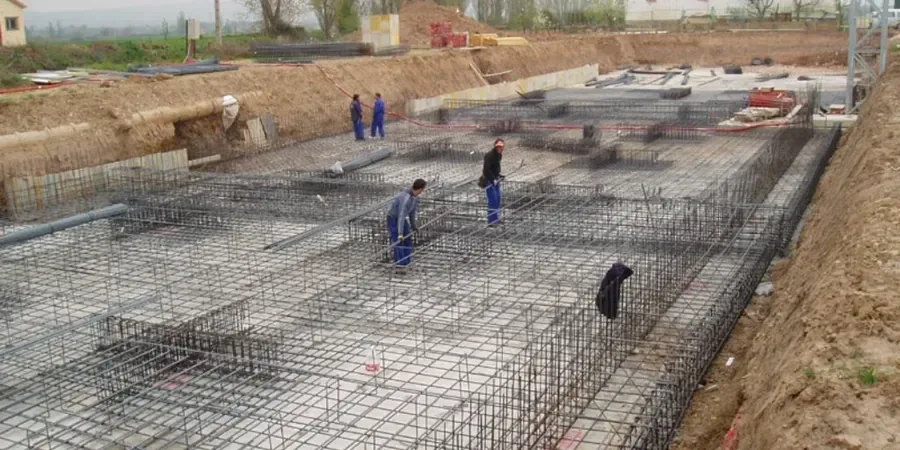
In Oakland, shallow foundation design must reconcile soft bay muds in the flats with colluvial soils in the hills—two very different problems under the same seismic code.
Approach and scope
Site-specific factors
Oakland sits in a high-seismicity zone with multiple active faults within 20 miles. The 1989 Loma Prieta earthquake caused widespread liquefaction in the Marina District and along the Oakland waterfront. For shallow foundation design, the primary risk is bearing capacity loss during shaking—especially in saturated loose sands and soft clays beneath the flatlands. We evaluate this using NCEER-based liquefaction triggering curves (Youd & Idriss, 2001) and compare the computed factor of safety against a threshold of 1.0. If the factor drops below 1.0, we recommend Improvement such as deep soil mixing or stone columns before placing shallow footings.
Relevant standards
IBC 2021 (International Building Code) – Chapter 18, ASCE 7-16 – Minimum Design Loads and Associated Criteria, ASTM D1586-18 – Standard Test Method for SPT, ASTM D2487-17 – Unified Soil Classification System
Related technical services
Bearing Capacity Analysis
We calculate ultimate and allowable bearing capacities using Terzaghi and Meyerhof methods, adjusted for groundwater and eccentric loads. Results are delivered in a signed geotechnical report ready for plan check.
Settlement Prediction
Using elastic theory and consolidation data from oedometer tests, we estimate immediate and long-term settlements under service loads. We flag differential settlements that could crack slabs or tilt structures.
Seismic Soil-Structure Interaction
We model the foundation response under design earthquakes, considering site amplification (Vs30), liquefaction potential, and soil-structure kinematic effects. Output includes sliding and overturning checks per ASCE 7.
Typical parameters
FAQ
What is the typical cost range for a shallow foundation design study in Oakland?
For a standard residential or low-rise commercial project in Oakland, the geotechnical investigation and design report typically costs between US$1,710 and US$3,120. This includes field borings, laboratory testing, bearing capacity analysis, and a signed report. Larger or more complex sites may require additional SPT borings or seismic studies.
How deep do shallow foundations need to be in Oakland?
Minimum footing depth in Oakland is generally 18 inches below finished grade to avoid frost heave and surface scour. In hillside areas with colluvial soils, we often increase depth to 24 inches to reach competent bearing strata. The final depth is determined by the soil profile encountered during test borings.
Can I use shallow foundations on soft bay mud near the Oakland estuary?
It is possible but challenging. Soft bay muds have low bearing capacity (typically below 2,000 psf) and high compressibility. We usually recommend a reinforced raft slab or Improvement such as deep soil mixing or preloading. A shallow foundation can work if the mud layer is thin (less than 15 feet) and underlain by stiff soil.
What soil tests are required for shallow foundation design in Oakland?
Standard tests include SPT (ASTM D1586) for strength, Atterberg limits (ASTM D4318) for plasticity, and consolidation tests (ASTM D2435) for settlement analysis. We also run a sieve analysis for grain size distribution. For seismic compliance, we determine the site class via Vs30 measurement or correlated N-values.