Geotechnical laboratory testing in Oakland forms the critical backbone of any construction or infrastructure project that interacts with the ground. This category encompasses a comprehensive suite of standardized tests designed to determine the physical, mechanical, and hydraulic properties of soils and rock. From assessing how much load a soil can bear before failing to predicting how much it will settle over decades, these analyses provide the quantifiable data engineers need to design safe foundations, retaining walls, tunnels, and pavements. In a seismically active and geologically diverse region like Oakland, relying on mere visual classification or presumptive values is an unacceptable risk; laboratory testing transforms site-specific samples into reliable engineering parameters.
Oakland's geological setting demands this rigorous approach. The city straddles the boundary between the flatlands along the San Francisco Bay and the steep, landslide-prone hills of the East Bay range, underlain by the active Hayward Fault. This creates a complex mosaic of subsurface conditions, from deep, compressible Bay Mud deposits in areas like Jack London Square to colluvial soils, weathered shale of the Franciscan Complex, and artificial fill in the foothills. Each material behaves fundamentally differently under load and when exposed to water. A soil mechanics study must account for these local variations, as the presence of expansive clay layers or liquefiable sands can dictate entirely different foundation solutions within a single project site.
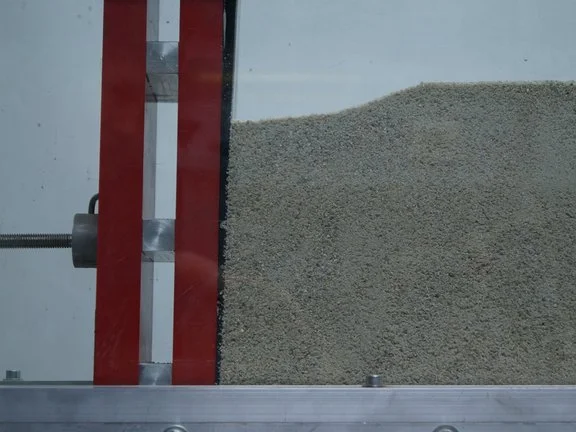
Adherence to national standards is non-negotiable for Oakland projects. All laboratory procedures strictly follow ASTM International standards, which are referenced in the California Building Code (CBC). Tests such as the unconfined compression test (UCS) for cohesive soils or rock cores are performed per ASTM D2166, while the triaxial test follows ASTM D4767 to provide shear strength parameters under controlled drainage conditions. For settlement analysis, the oedometer consolidation test is conducted according to ASTM D2435, generating the critical compression index and preconsolidation pressure needed to predict the magnitude of settlement in Oakland's Bay Mud. These protocols ensure that the data is legally defensible and accepted by city reviewers and structural engineers.
The types of projects requiring these services cover the entire spectrum of Oakland's built environment. Mid-rise and high-rise developments in the downtown core rely on consolidation and triaxial testing to design deep foundations that punch through weak surficial layers. Hillside residential construction uses Atterberg limits and direct shear testing to evaluate slope stability and landslide potential during the rainy season. Municipal infrastructure, including stormwater detention basins and roadways, requires Proctor test (Standard or Modified) data to specify compaction requirements that prevent future settlement and pavement failure. Even smaller retaining wall designs demand reliable shear strength values to ensure global stability.
Available services
Residual soil characterization
→ Ver detalleUnconfined compression test (UCS)
→ Ver detalleOedometer consolidation test
→ Ver detalleProctor test (Standard or Modified)
→ Ver detalleTriaxial test
→ Ver detalleSoil mechanics study
→ Ver detalleAtterberg limits
→ Ver detalleLaboratory permeability test (falling/constant head)
→ Ver detalleFAQ
What is the main purpose of a geotechnical laboratory testing program for an Oakland construction project?
The primary purpose is to quantify the engineering properties of subsurface soils—such as shear strength, compressibility, permeability, and compaction characteristics—using controlled ASTM-standard methods. This data is essential for designing safe foundations, evaluating seismic hazards like liquefaction, predicting settlement, and ensuring compliance with the California Building Code for Oakland's unique Bay Mud and hillside geology.
How do local soil conditions in Oakland influence the selection of laboratory tests?
Oakland's geology ranges from highly compressible Bay Mud in flatland areas to unstable colluvial soils in the hills. This directly dictates test selection: consolidation and triaxial tests are critical for structures on Bay Mud to predict settlement, while Atterberg limits and shear strength tests are prioritized for hillside sites to assess slope stability and expansive clay behavior.
What is the typical turnaround time for a complete suite of geotechnical lab tests?
Turnaround times vary significantly based on the test type. Simple index tests like moisture content and Atterberg limits can be completed within a few days. However, consolidation tests on fine-grained soils may require one to two weeks due to the long saturation and loading stages, and triaxial shear tests with pore pressure measurement can take a similar duration.
Are laboratory test results legally required for obtaining a building permit in Oakland?
Yes, for most new construction and major additions, the City of Oakland's planning and building departments require a geotechnical report that includes laboratory data. This report, prepared by a licensed geotechnical engineer, must demonstrate that the proposed foundation design adequately addresses the site's soil conditions per the California Building Code, making lab testing a fundamental permit requirement.