Oakland's geology is a mix of Franciscan Complex bedrock in the hills and deep alluvial deposits toward the bay. The water table sits shallow in the flatlands, often within 3 to 5 feet of the surface during wet months. That combination makes geotechnical drainage design a critical step before any foundation work. We start every project with a site-specific assessment of groundwater behavior, soil permeability, and seasonal fluctuations. Without proper drainage, even well-designed foundations can suffer from hydrostatic pressure, seepage, or long-term settlement. That is why we pair our drainage designs with field permeability tests to measure how fast water moves through the native soil. Our team has been handling these conditions across Oakland for years, from the alluvial soils near Lake Merritt to the colluvial slopes in the upper hills.
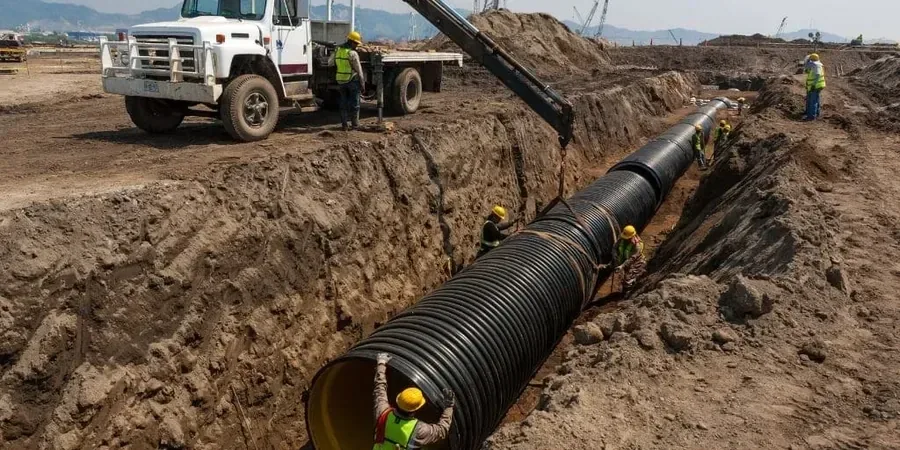
Oakland's shallow water table and clay-rich soils mean drainage design is not optional — it determines whether your foundation lasts 10 years or 50.
Approach and scope
Site-specific factors
In Oakland, the most overlooked drainage risk happens in the hills after a dry summer. The soil cracks open, and when the first big rain hits, water pours straight down the fissures. That rapid infiltration can saturate a slope in hours, not days. We have seen retaining walls fail exactly this way — no warning, just a sudden mudslide. That is why our geotechnical drainage design always includes a seasonal moisture assessment and a review of historic landslide records for the specific neighborhood. We also check for underground springs, which are common along the Hayward Fault trace running through Oakland.
Relevant standards
ASCE 7-22 (Minimum Design Loads and Associated Criteria for Buildings), IBC 2021 (Chapter 18, Soils and Foundations), ASTM D5092-04 (Standard Practice for Design and Installation of Groundwater Monitoring Wells), FHWA-NHI-05-096 (Mechanically Stabilized Earth Walls and Reinforced Slopes)
Related technical services
Subsurface Drainage Design for Slopes
Horizontal drains, trench drains, and blanket drains designed specifically for Oakland's hillside geology. We model groundwater flow through layered colluvium and bedrock, then size the drainage system to keep the phreatic surface below the failure plane. Each design includes filter compatibility analysis to prevent clogging from the local clayey fines.
Foundation Drainage and Waterproofing Integration
Perimeter drains, under-slab drainage layers, and sump systems for Oakland's flatland alluvial soils. We coordinate with the waterproofing membrane and vapor barrier to create a continuous water management system. Designs comply with IBC Chapter 18 and include discharge plans that meet Alameda County stormwater regulations.
Typical parameters
FAQ
Why is geotechnical drainage design important in Oakland?
Oakland sits on varied geology — from shallow bedrock in the hills to deep clay in the flatlands — with a high water table and seasonal rainfall that can exceed 25 inches per year. Without proper drainage, hydrostatic pressure builds up behind retaining walls and under slabs, leading to cracks, seepage, or slope failure. Our designs address these local conditions directly.
How much does geotechnical drainage design cost in Oakland?
For a typical single-family lot in Oakland, the geotechnical drainage design component ranges between US$900 and US$2,620. This covers site evaluation, groundwater modeling, drainage layout, and a report with construction details. Complex hillside properties or multi-unit projects may fall at the higher end due to additional analysis.
What is the difference between a French drain and a geocomposite drain for Oakland soils?
French drains work well in Oakland's hillside colluvium where gravel packs can handle the flow. But in the flatlands, where the clay content is high, gravel drains often clog within a few years. Geocomposite drains — a prefabricated core wrapped in filter fabric — maintain flow capacity even in fine-grained soils. We recommend geocomposite drains for any Oakland site with more than 30% fines passing a No. 200 sieve.